

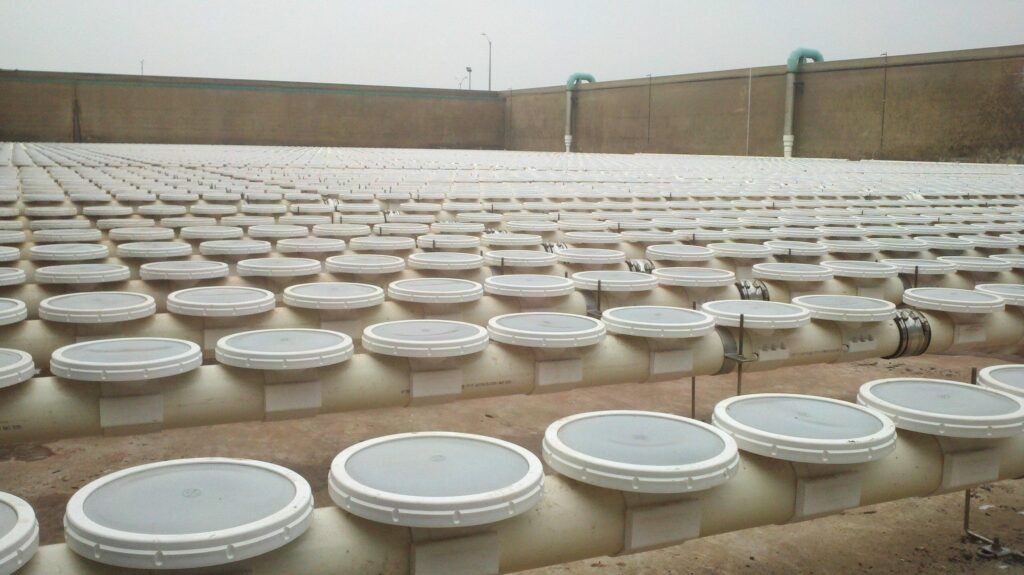
A disc diffuser is a device used in water and wastewater treatment systems to add air (or oxygen) into liquid. It’s commonly found at the bottom of aeration tanks in sewage treatment plants, fish farms, and industrial water treatment systems.
How it works
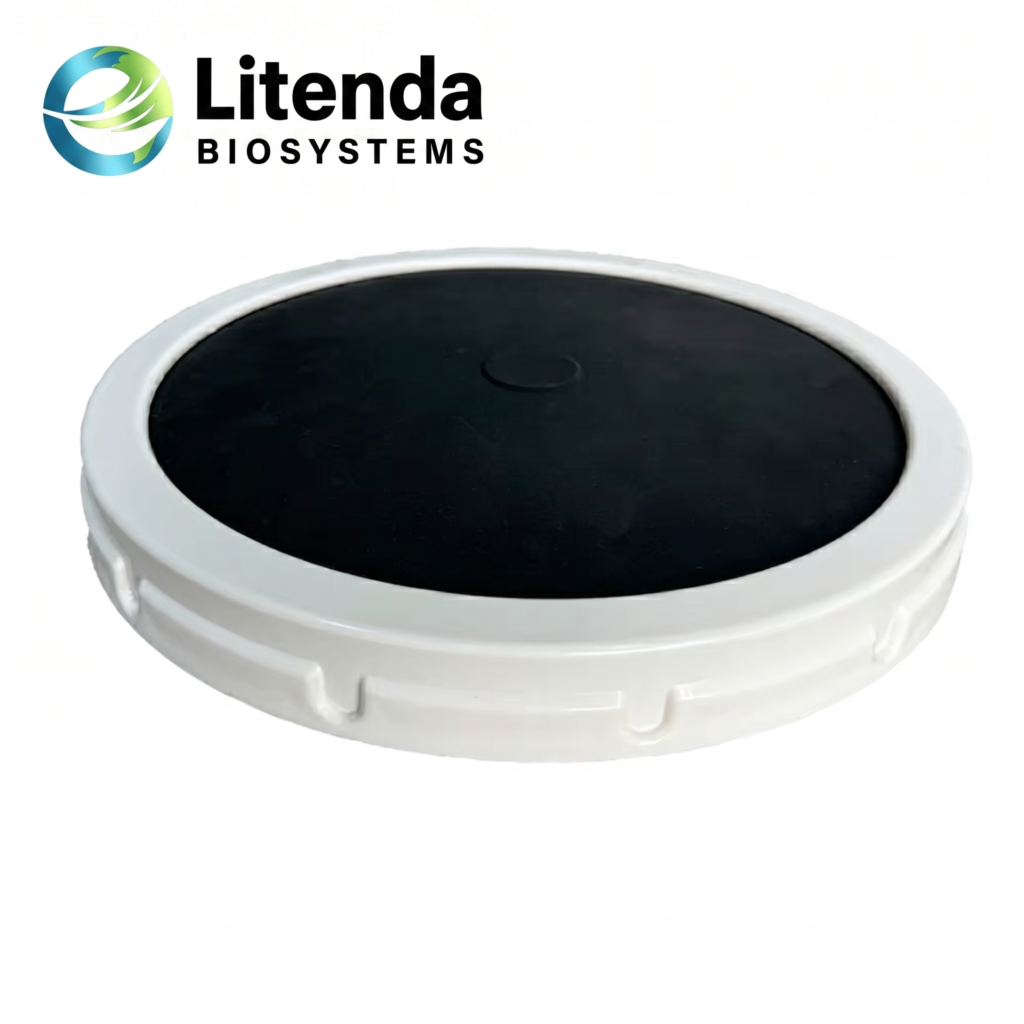
A disc diffuser is typically a round, flat unit connected to an air pipe. Compressed air passes through a flexible membrane or porous material containing tiny holes. This creates very small bubbles that rise through the water.
The bubbles:
- transfer oxygen into the water,
- help microorganisms break down waste,
- keep solids suspended and mixed.
Main parts
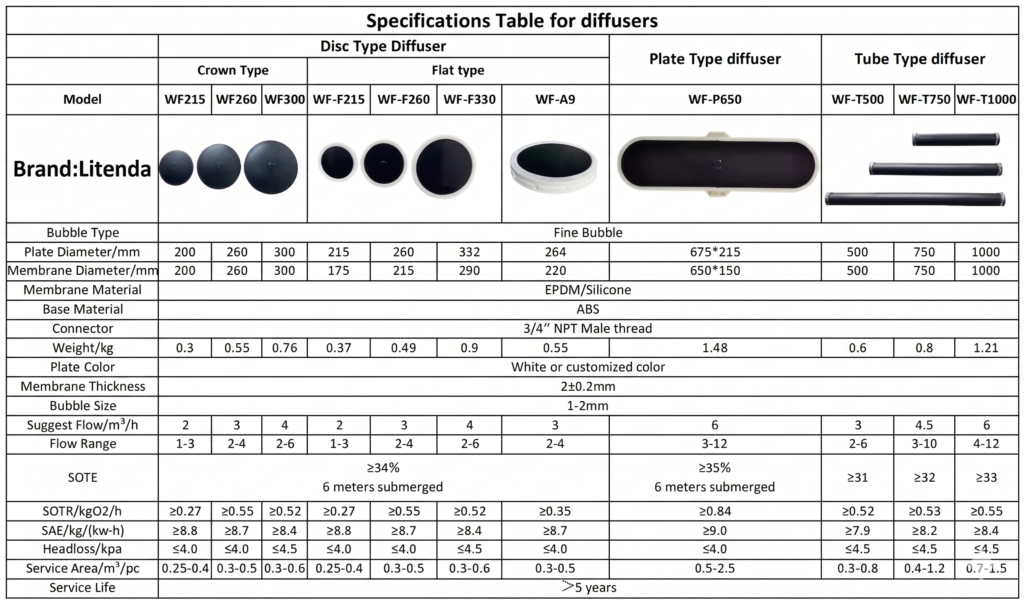
- Disc-shaped body — usually plastic or stainless steel
- Membrane — often EPDM, silicone, or polyurethane
- Air connection — connects to the blower piping system
Why small bubbles matter
Fine bubbles have more surface area and stay in the water longer, so oxygen transfer is more efficient. That reduces energy consumption, which is one of the biggest operating costs in treatment plants.
Common types
- Fine bubble disc diffusers
- Produce tiny bubbles
- High oxygen transfer efficiency
- Most common in municipal wastewater treatment
- Coarse bubble diffusers
- Larger bubbles
- Better mixing
- Lower oxygen efficiency
Typical applications
- Municipal wastewater treatment plants
- Industrial effluent treatment
- Aquaculture and fish farming
- Lakes and pond aeration
- Bioreactors
Advantages
- Energy efficient
- Uniform oxygen distribution
- Relatively easy maintenance
- Long membrane life (depending on material)
Simple visual idea
Imagine an upside-down shower head sitting underwater, releasing thousands of tiny air bubbles evenly across a tank.
Improve Your Wastewater Treatment Efficiency
Get high-quality aeration systems and diffusers at competitive prices.